


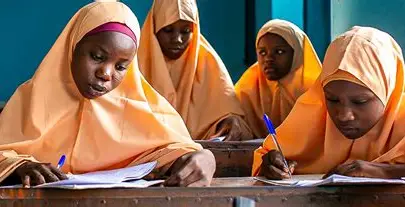
The Federal Ministry of Education has reaffirmed its commitment to addressing gender disparities in education and creating safer, more inclusive learning environments nationwide.
The ministry’s permanent secretary, Folake Olatunji-David, gave the assurance on Monday in Abuja at an event marking the 2026 International Day of the Girl Child, themed “The Girl I Am, The Change I Lead”.
Olatunji-David said the government was strengthening policies and programmes to improve girls’ access to education, school retention and completion, particularly in science, technology, engineering and mathematics (STEM).
She said the government was implementing the National Policy on Gender Education and working with development partners and non-governmental organisations to expand safe learning spaces, provide menstrual hygiene support and offer scholarships.
Olatunji-David cited the Adolescent Girls Initiative for Learning and Empowerment (AGILE) and the Lumina Project for Girls as initiatives aimed at improving educational opportunities and equipping girls with relevant skills.
She added that the ministry was promoting digital literacy, leadership development and vocational training while strengthening protection against gender-based violence.
Olatunji-David identified poverty, child marriage, gender-based violence and limited access to safe learning spaces as challenges confronting girls. She called on parents, communities, faith-based organisations, educators and the private sector to help ensure that girls were safe, educated and empowered.
Earlier, the ministry’s director of secondary education, Adeniji Ibrahim, urged schools to provide safe and inclusive environments that encouraged girls to pursue education and aspire to leadership positions.
The UNICEF education officer in Abuja, Blessing Afuwai, said one in every four girls in Nigeria was out of school, while nearly three-quarters lacked foundational literacy and numeracy skills.
Afuwai attributed the challenges to poverty, insecurity, unsafe learning environments and harmful cultural practices, including child marriage and gender-based violence.
She reaffirmed UNICEF’s commitment to supporting the federal government to ensure that girls acquired relevant skills and completed their education.
A student of Federal Government College, Kwali, Abuja, Victory Hope-Omenma, urged the government to provide scholarships, improve hostel safety and make sanitary pads more accessible.
She also called for better menstrual hygiene education and support to help girls develop their talents.
Another student, Angel Daniel of Federal Government Girls College, Bwari, Abuja, called for an end to child marriage, saying it deprived girls of opportunities to pursue their dreams.
The International Day of the Girl Child is observed annually to promote girls’ rights and highlight the challenges they face.