


The Food and Agriculture Organisation (FAO) of the United Nations has urged the Nigerian government to scale up investment in agricultural innovation to tackle hunger, improve nutrition and ensure access to affordable, healthy diets.
Hussein Gadain, FAO Representative in Nigeria and the Economic Community of West African States (ECOWAS), made the call at the 2026 World Food Day Sensitisation Walk on Friday in Abuja.
The theme of this year’s celebration is “Innovate Today. Nourish Tomorrow.”
Gadain, represented by Jimmy Owani, Senior Programme Officer in the Office of Emergency and Resilience, said new approaches and technologies were essential to achieving food security and sustainable development.
He stressed that their benefits must reach those who need them most, extending beyond laboratories and policy discussions to farmers’ fields, fishing communities, pastoral systems and households across Nigeria.
He called for collective action involving governments, farmers, researchers, academia, the private sector, financial institutions, civil society, development partners, women and young people.
“Let us commit ourselves to ensuring that every Nigerian household has access to safe, nutritious and affordable food. Let us continue to empower farmers, women and young people as drivers of agricultural transformation.
“Every innovation begins with knowledge, every harvest begins with a hand, and every sustainable future begins with both.
“By investing in people, fostering innovation and strengthening partnerships, we can build resilient agrifood systems, end hunger and ensure that no Nigerian is left behind,” he said.
Gadain explained that agricultural innovation went beyond artificial intelligence, drones and sophisticated digital technologies to include climate-smart farming, improved farming practices, quality seeds and breeds, irrigation, mechanisation, sustainable natural resource management, indigenous knowledge, stronger institutions, new business models and enabling policies.
He said food security for ordinary Nigerians meant having sufficient, safe and nutritious food on the table every day at an affordable price.
For farmers, he said, this required access to quality seeds, fertilisers, mechanisation, irrigation, climate information, extension services, digital advisory platforms, markets and finance to boost productivity and incomes.
“For pastoralists, fishers and aquaculture producers, it means improved production systems, better breeds and feeds, disease management and stronger market opportunities.
“For young people, it means jobs, entrepreneurship, digital agriculture, food processing, value addition and new opportunities across value chains.
“For women, innovation means greater access to land, finance, technologies, skills and markets to fully contribute to agricultural production and economic transformation,” he said.
Gadain said Nigeria had enormous potential to become a leading agrifood powerhouse in Africa, given its vast agricultural resources, abundant water, vibrant private sector and large youth population.
He commended the federal government for its policy reforms and strategic investments aimed at strengthening food systems.
However, he said climate shocks, insecurity, post-harvest losses and limited access to finance continued to constrain the sector’s potential.
He called for wider adoption of proven solutions, including climate-smart agriculture, irrigation, mechanisation, improved seeds and breeds, sustainable land and water management, resilient livestock systems, sustainable fisheries and aquaculture, digital technologies and early warning systems.
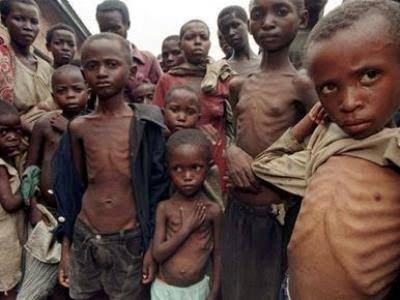
The FAO representative said an estimated 645 million people faced hunger in 2025, while 2.69 billion people could not afford a healthy diet.
He said the challenge was not simply to produce more food but to ensure it was accessible, affordable, nutritious and sustainably produced for everyone.
According to him, climate change, conflict, economic instability and environmental degradation continued to put immense pressure on agrifood systems, affecting production, disrupting markets and threatening livelihoods, particularly in rural communities and among small-scale producers.