


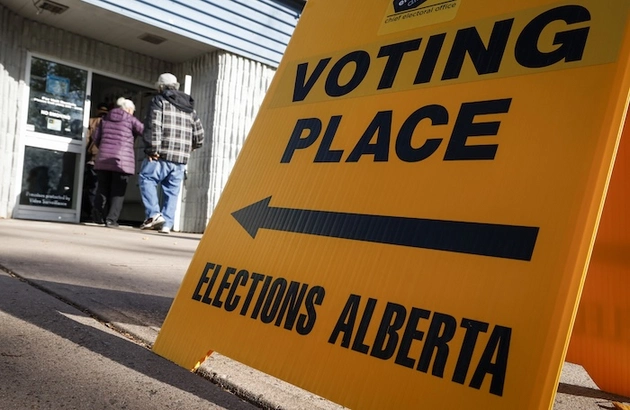
Voters in Canada’s oil-rich Alberta province will decide Monday whether to begin a process that could lead to a future independence referendum.
The vote is not a direct referendum on independence but would determine whether the province begins the legal process towards a possible separation from Canada.
More than 1.35 million Albertans, or 43 per cent of eligible voters, cast advance or special ballots ahead of Monday’s vote, exceeding the 810,000 who voted early in the 2023 provincial election.
Even if voters reject the proposal, separatist leaders say the movement has gained enough political ground to remain relevant.
Canadian Prime Minister Mark Carney urged Albertans to vote decisively against the proposal during two days of campaigning in his home province.
“Vote like Canada’s future depends on it because it does,” Carney told a pro-Canada rally on Friday in Edmonton.
The vote comes amid tensions over U.S. President Donald Trump’s trade war and threats to make Canada the 51st U.S. state, which have fuelled Canadian nationalism.
Carney received loud applause at rallies in Calgary and Edmonton when he spoke about diversifying Canada’s trade away from the United States.
Although Alberta has traditionally leaned conservative and resented federal energy policies, Carney has gained support in the province by adopting a more energy-friendly approach, including backing a proposed oil pipeline to the Pacific Coast.
Alberta Premier Danielle Smith, who called the vote despite opposing independence, recently cited a poll showing that 22 per cent of residents supported separation, a figure she described as too high.
Carney, who has joined Smith in opposing independence, warned that the vote came at the “worst possible time” and urged Albertans not to use it merely to send a message to the federal government.
The vote also comes as Alberta mourns four service members killed in a weekend fire at Canadian Forces Base Wainwright. Thirty-nine others were injured, including 19 critically.
Carney described the incident as one of Canada’s worst peacetime military tragedies on domestic soil and ordered flags lowered to half-staff nationwide.