


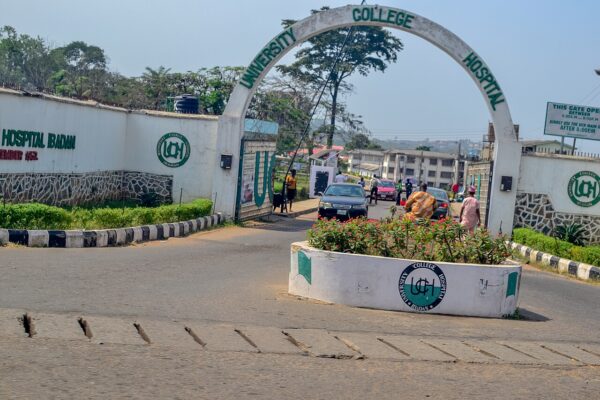
The University College Hospital (UCH), Ibadan, has attributed long waiting times at the hospital to staff shortages, rising patient numbers and underperforming primary healthcare centres.
Jesse Otegbayo, the hospital’s chief medical director, said this on Thursday in Ibadan during its 69th anniversary celebration.
He said UCH was already short-staffed before the mass emigration of health workers, popularly known as the ‘Japa’ syndrome, worsened the situation.
Otegbayo also blamed the pressure on the hospital on weak primary and secondary healthcare centres, which had forced patients with minor ailments, including malaria, to seek treatment at UCH.
He said many patients preferred the hospital because they believed they would not receive adequate care elsewhere.
According to him, addressing the staff shortage and strengthening lower-level healthcare facilities would significantly reduce waiting times and allow UCH to focus on complex cases.
“Nobody, whether young or old, should come to the hospital and wait for so long.
“When primary health centres are living up to expectations, we can focus on the big picture — the severe diseases, the things that other hospitals cannot handle.
“That’s what we are meant for. We are supposed to see complex cases that cannot be resolved elsewhere.
“But when every case is brought here, there will always be long queues and we are overloaded,” he said.
On chronic diseases, Otegbayo said the hospital was recording more cases of diabetes and hypertension, which he attributed to the adoption of Western lifestyles.
He said UCH had largely addressed its electricity challenges through the installation of a transformer and the replacement of its analogue 33KV substation with a digital one. He added that the hospital had also commissioned a new 11KV substation.
Otegbayo said cable theft had reduced following the installation of CCTV cameras covering about 80 per cent of the affected areas. He added that the hospital was replacing underground cables with overhead armoured cables and gradually changing those installed since 1957.
“We have now lifted restriction or rationing of power. Power is now 24/7. If light goes, it means it is an [external] cut off by IBDEC power supply, not on UCH,” he said.
Explaining why some patients avoided the hospital, Otegbayo said some expected the quick service associated with private hospitals, where patients could register, see a doctor and receive treatment immediately.
He said UCH was a multi-specialty teaching hospital where patients might need to see different specialists before receiving treatment.
On water supply, he said the hospital had several industrial boreholes but could not sink more because of concerns about the impact on building foundations.
He said construction of an estate had also affected the hospital’s main source of fresh water, the Dandaroo River, forcing it to pump water into its reservoir instead of relying on natural flow.
Otegbayo said the hospital paid daily to pump the water, a cost he described as unsustainable, and expressed hope that the problem would be resolved.